

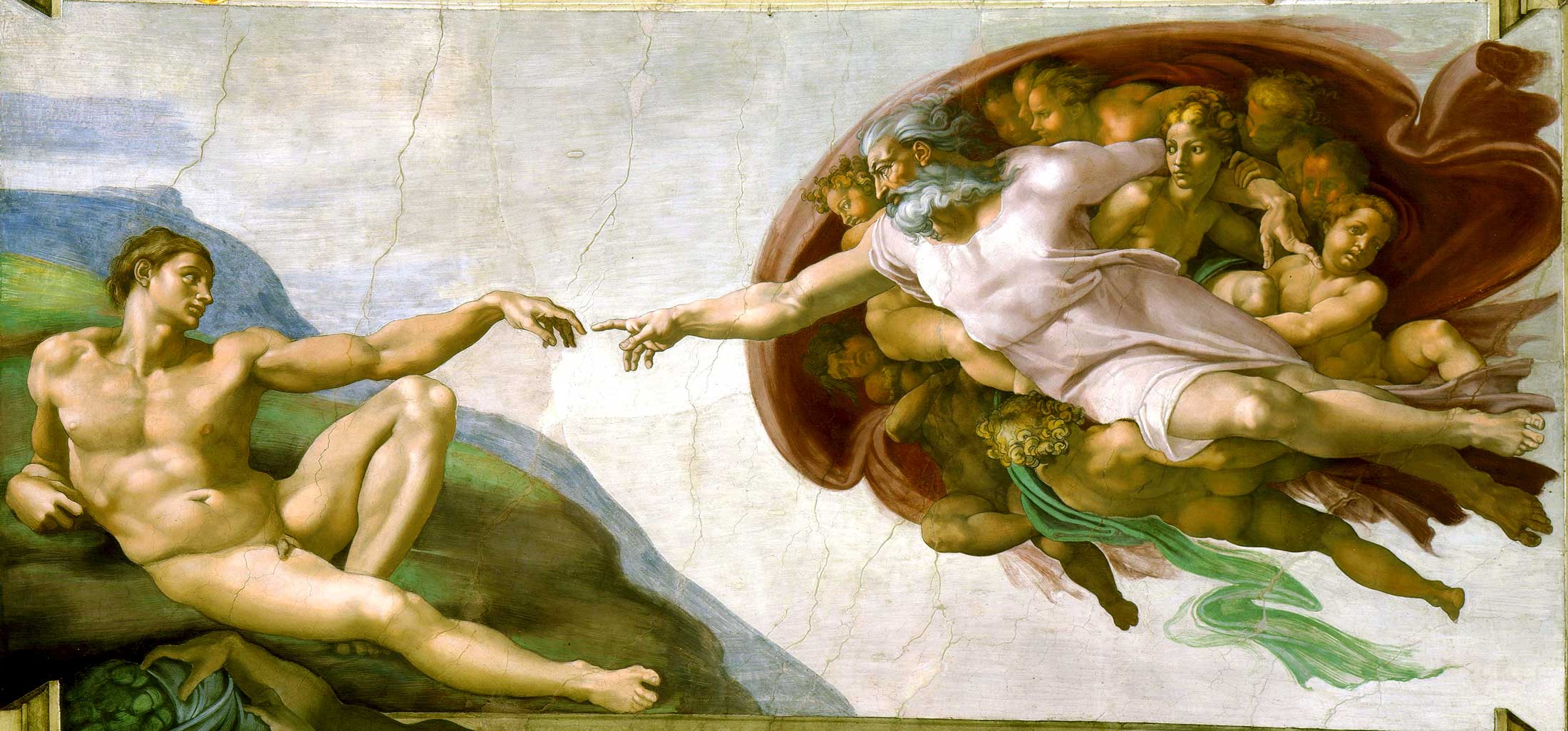
This is a three-day intensive workshop on buon fresco painting, emphasizing the historical technique as practiced in medieval Byzantium and Italy. This workshop is an introduction to the technique of fresco painting with instructions on fresco secco painting.
Hands-on, Practical Instruction
This three-day workshop will give you the skills to complete fresco painting for walls and portable panels. The course begins with hands-on instruction on applying plaster. Using a prototype, you draw and paint the cartoon, transfer it to the plaster and begin painting the image. At the end of this workshop, you will complete a portable fresco to take home with you.
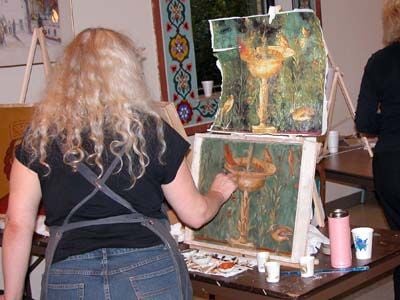
Day 1: Preparation
We spend the morning organizing our workplaces and learning about fresco painting techniques. You are introduced to fresco materials and tools, their application, and sources. Next, you will learn about the fresco "cartoon," a full-color preparatory drawing. We provide several images for you to choose from to use as your prototype for your fresco painting at the workshop. In the afternoon, you draw the cartoon by transferring the image from a reproduction onto tracing paper, adjust and refine the cartoon and then transfer the drawing onto a piece of paper. We learn about traditional fresco pigments by grinding, preparing, and testing fresco paints. You will then paint the cartoon in color as if it was the final fresco image.
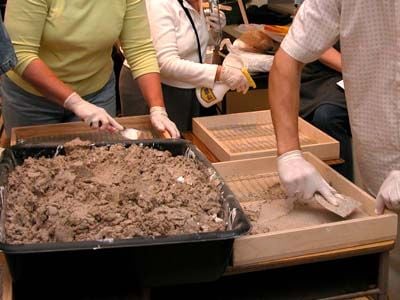
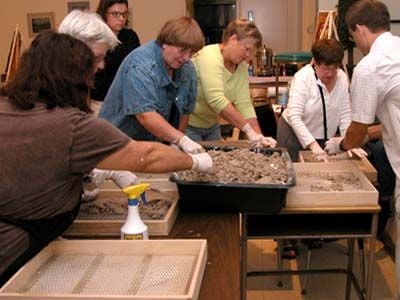
A metal mesh (we typically use diamond metal lath) is an incredible innovation for fresco painting because it can hold the plaster onto any surface, including wood. Fresco plaster is comprised of two essential ingredients: lime putty and sand. Above, students apply plaster to a wood frame in preparation for painting.
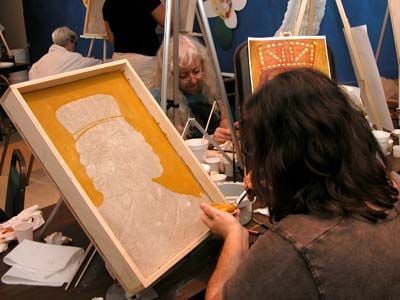
A full-color cartoon of the picture is prepared before the painting can begin. This cartoon is transferred to the panel by tracing it onto the wet plaster. On the left, a student applies a background color on the wet plaster. Shown at the right is the cartoon (above) used as the model to paint the fresco panel (below).
Day 2: Plastering and Painting on the Wet Plaster
We prepare the portable fresco panel for painting by preparing the plaster composed of two essential ingredients—lime putty and sand—and then applying the layer of plaster to the portable fresco panel. While this plaster is becoming ready for painting, we transfer the cartoons onto the fresh plaster and prepare our pigments. We then begin painting onto the wet plaster.
First, the local colors are applied to the large areas of the image, such as the background, allowing the pigment to adhere to the fresh lime. Afterward, the figure is drawn, and all the shadows are elaborated with green earth and red ocher. These parts must be done first. The highlights are done later because lime is used as white, which helps adhere the pigments to the plaster. When the work is finished, the colors appear very saturated. Still, after some days, some colors, like lapis lazuli, yellow ocher, green earth, and others, when mixed with lime, appear lighter, whereas red ocher and vine black become darker. It is essential to remember this feature of fresco painting and pay very close attention to this when you work with colors.
Day 3: Secco Painting on Plaster
In the morning, we check our paintings and prepare materials for the secco painting. We then begin the secco painting to highlight some colors that require this technique. We finish our painting in the early afternoon.
Who Should Attend?
You should attend this workshop if you want to learn the buon and secco fresco painting techniques. This workshop is designed for those with little or no experience in fresco painting or for more advanced students who want a refresher course.
What Supplies are Needed?
We have provided a complete list of materials you will need at the workshop. In the list, we've indicated what materials will be available for you at the workshop and what supplies you can either purchase in advance from Natural Pigments or bring with you to the workshop. You can find the complete list below.
Tuition
The tuition of $450 also includes the fresco plaster, portable fresco panel, and other supplies required for the workshop. However, you will need pigments, brushes, and tools you can bring to the workshop or purchase from Natural Pigments. Please see the complete list below to see what supplies are needed at the workshop.
How to Register
Register now for the
Instructor
George O'Hanlon is a painter and founder of Natural Pigments, which supplies artists worldwide with traditional painting supplies. He teaches courses on different painting techniques, such as egg tempera and fresco, and about traditional and historical artists' materials, such as pigments, preparing panels for painting with traditional gesso, gilding, etc. He is also the founder of the non-profit organization, Iconofile, which educates individuals and groups on sacred art painting techniques, especially that of icon paintings.
Art Materials and Tools for the Workshop
In the following table are the materials and tools required for the workshop. In the far right column with the header "Supplied," each item is marked as to whether we supply the item for each student ("Yes" in Supplied column) or you must bring one or obtain one for the workshop ("No" in Supplied column). We also indicated which items are available in the Basic or Complete Student Kits ("Yes" in the Basic or Complete column) that you can purchase in advance from Natural Pigments. If you order one of the kits with your registration or at least 30 days before the workshop date, we will ship it directly to the workshop at no cost to you. As a registered student of the workshop, you will also receive a valuable discount on the cost of the kits. Once you register and pay the workshop tuition, you will receive a code by email that you can use to receive this discount when purchasing either student kit.
• Purchase the
• Purchase the
We remind students that all tools made available by Natural Pigments during the workshop are loaned to students and must be returned to Natural Pigments. You may also want to mark the tools you bring to the workshop with your name so they are not misplaced.
| Required Materials and Tools | ||||
|---|---|---|---|---|
| Item | Description | Supplied | Basic Kit | Complete Kit |
 |
Portable Fresco Panel Wood panel and frame to support the fresco plaster. They are made from hand-selected Baltic Birch plywood, ruggedly made to hold your portable fresco with galvanized diamond metal lath. |
Yes | No | No |
 |
Lime Putty Lime Putty for intonaco and other plaster coats. The lime putty we use comes from our lime pit, aged at least two years, and has been extensively tested for use in fresco. With lime of this purity, it is possible to create brilliant fresco paintings with excellent permanence. |
Yes | No | No |
| Sand Use sharp, fine sand that is well-washed and graded to create a 30% void ratio by volume. Washed and graded 30 mesh sand usually works well. The void is filled by lime putty to create the proper binder-to-aggregate ratio and represents the 1:3 ratio of binder-to-sand often found in historic fresco plaster. |
Yes | No | No | |
 |
Pigments The following palette of eight pigments will be used at the workshop. However, you may want to bring other pigments (dry powder or pigment dispersion) to supplement these at the workshop. For this workshop, you can purchase any of the pigments listed in the Fresco section of the Natural Pigments online store. Ultramarine Blue Verona Green Earth Italian Yellow Earth Venetian Red Italian Burnt Sienna Italian Raw Umber German Vine Black Titanium Dioxide |
No | Yes | Yes |
| Milk of Lime Milk of Lime is for tempering pigments and mixing with colors in the first coat of paint. |
Yes | No | No | |
| Painting Tools | Painting on moist plaster requires long and soft hair brushes. In the beginning, the plaster surface is sensitive, so broad soft-haired brushes are best for painting the first colors. When the first coat of color begins to set, long bristle brushes can be used. Sable hair brushes are the best for fresco painting, but the rough surface wears brush hairs quickly. We recommend less expensive soft-hair brushes for fresco painting. Goat hair brushes are well suited for leaving streaky, uneven brush strokes that are interesting as accents. | |||
 |
Round Brushes Soft-hair round brushes: Sizes #2, #4 and #8 Bristle hair round brushes: Sizes #2, #4 and #8 The exact sizes are not too important; however, brushes of approximately this size range should be available. |
No | No | No |
 |
Flat Brushes Soft-hair flat brushes: Size #22 or 20 mm (3/4 inch) wide Bristle hair flat brush: Size #22 or 20 mm (3/4 inch) wide The exact size is not too essential but brushes approximately of this size should be available. |
No | No | No |
 |
Palette Any palette with 8 to 10 wells, such as the 10-well round plastic palette, 7.5 in. (19 cm) diameter, pictured at left. |
No | Yes | Yes |
| Drawing Tools | Tools and supplies necessary to transfer your drawing to the plaster surface. You will also need supplies: Pencil, HB, Eraser; Drafting tape, 2 cm (0.75 in.) wide; Tacks; Latex gloves and Hand lotion. We will have these items available for you to use at the workshop. | |||
| Tracing Paper Ordinary white bond is suited for drawing and painting the cartoon and transferring it to the fresco plaster. |
Yes | No | No | |
 |
Transfer Paper To transfer designs onto most surfaces. Transfer paper leaves no wax residue to interfere with the acceptance of paint. The transfer marks erase like a pencil with no smear. Paint over the tracing won't skip or bead and can be reused repeatedly. |
Yes | No | No |
 |
Stylus Transfer drawings to a panel with a stylus that will not tear the paper. Rounded points prevent tears, one for fine work and the other for thicker lines. |
No | Yes | Yes |
| Paint Making Tools | Paint Making Tools mix the dry pigments with water, preparing the colors for application to the wet plaster. Although we use ready-dispersed pigments in the workshop, we will demonstrate how to prepare powder pigments for use in fresco. | |||
 |
Mortar and Pestle Porcelain mortar and pestle for grinding pigments. The hard inside surface is unglazed, allowing you to easily rub materials to the degree of fineness needed for painting. The mortar and pestle are handy when needed to reduce the particle size of pigments for smoother paint and to use Bianco San Giovanni white pigment. |
No | No | Yes |
 |
Squeeze Bottle Squeeze bottle with spout cap for dispensing water used to mix with powder pigments. |
No | Yes | Yes |
 |
Muller Glass muller for grinding powder pigments. The bottom of the glass muller is flat and sandblasted to provide an excellent grinding surface. |
Yes | No | No |
 |
Grinding Plate Glass plate with sanded edges for use with the muller to disperse pigments into water. |
Yes | No | No |
 |
Spatula The spatula is for mixing dry pigment powder with water on a glass slab. Use it with a muller and slab to mix pigment with water and scrape accumulated paint from the muller's sides or collect paint into the center of the slab. |
Yes | No | No |
| Plaster Tools | Trowels are used to apply plaster and finish the surface before painting. All our tools were selected for their suitability for fresco. They are the finest, made to give years of service. The handle rise should be set for the correct "hang" and balance. The blade should be taper-ground and polished to give it the right amount of flexibility. | |||
 |
Mixing Board The mixing board and mortar pan is to mix the lime putty and sand. Made of high-density polyethylene, it is durable, lightweight, and easy to clean after mixing plaster. Dry plaster will not stick to its surface, so clean-up is easy. |
Yes | No | No |
 |
Mortar Hoe The mortar hoe is used to mix the plaster and sand. The holes in the blade allow for more effective mixing on a mixing board or in a mortar pan. The hoe from Natural Pigments head is a one-piece forged from carbon steel, riveted to a steel ferrule. This hoe has a heavy-duty 45.7 cm (18-in.) hardwood handle with a sturdy "D" grip. |
Yes | No | No |
 |
Gauging Trowel A gauging trowel is a versatile tool for transferring plaster (the rounded point is ideal for picking plaster out of a pail) and applying plaster. Use to mix or "gauge" small amounts of plaster. The rounded shape of the blade's heel allows the plaster to be carried further forward on the blade. Size: 17,78 x 8,57 cm (7 x 3-3/8 in.) |
No | No | Yes |
 |
Wood Float A wood float prepares the surface for troweling, or floating is the final operation if a rough finish is desired. Ours are made from 1,27 cm (1/2 in.) thick seasoned mahogany with a very smooth finish. The plastic handle is both comfortable and durable. This is the most popular float for fresco: 30,48 x 8,89 cm (12 x 3-1/2 in.). |
No | No | Yes |
 |
Finishing Trowel A finishing trowel is used to put a smooth finish on the plaster. It compacts the surface, adding to its quality and durability. Ours have a high-carbon steel blade that is cross-ground (usually only found on better finishing trowels) to hold its shape better. The handle is curved for better handling and machined-fitted onto the milled shank. Finishing trowels are narrower and longer than plastering trowels, and the blade is slightly convex. Ideal size for fresco most work: 20,3 x 7,6 cm (8 x 3 in.). |
No | No | Yes |
 |
Utility Brush The short-handle brush is for cleaning surfaces and tools. White tampico bristles are set in a high-tensile strength foam plastic block. The scrub brush will not absorb water and is made for long service. |
Yes | No | No |
| Optional Materials and Tools | |
|---|---|
| Item | Description |
 |
Bullnose Pointing Trowel Bullnose Pointing Trowel is for polishing the final plaster coat before transferring the cartoon and the completed fresco. Also valuable for applying plaster in tight or curved areas. Pointing trowels are handy for patchwork and cleaning other tools. Size: 13,97 x 4,76 cm (5-1/2 x 1-7/8 in.) |
| Portable Desk Lamp Although the workshop location is generally well-lighted, a portable desk lamp may be a good idea to bring. |
|
| Extension Cord If you bring a portable desk lamp, you must bring a grounded electrical cord between 12 and 18 feet long. |
|
Selecting a Picture to Paint
You are welcome to choose any image that you like as your reference to paint for the class. However, we recommend you use an image of a fresco painting similar to the ones on the or below. Attempting to paint an image in fresco that was initially painted in another medium, such as oil paint, will be difficult and frustrating. You can use one of the images below as the picture you paint at the workshop. Choose a picture that you feel comfortable painting. Some are more difficult than others. Click on the picture to download an image already sized for the workshop. This opens a new window with a larger view of the image. Right-click on this picture with your mouse, which opens a menu (in both Windows and Macintosh), and choose "Save Picture as..." or "Save Image as...".
Please do not use images that are complex and contain many elements. This will make learning challenging, and you will be frustrated attempting to paint such an image for the first time in fresco. If you have any questions about the suitability of an image you want to use at the workshop, send it to the instructor by email for evaluation.
The portable fresco panels we use in the workshop measure 12 by 15 inches. We would like to use larger panels for the workshop, but carrying a large and heavy fresco panel home with you (especially if you are arriving in the workshop city by airline) is inconvenient. Select an image that will fit the aspect ratio of the fresco panel either vertically or horizontally (portrait or landscape format).
IMPORTANT: Please size your image to fit within the 12 by 15-inch area, allowing about 0.25 inches in each direction for variances in the overall size. If you scale your image, you will save time at the workshop by not having to spend it scaling the image to fit the panel.
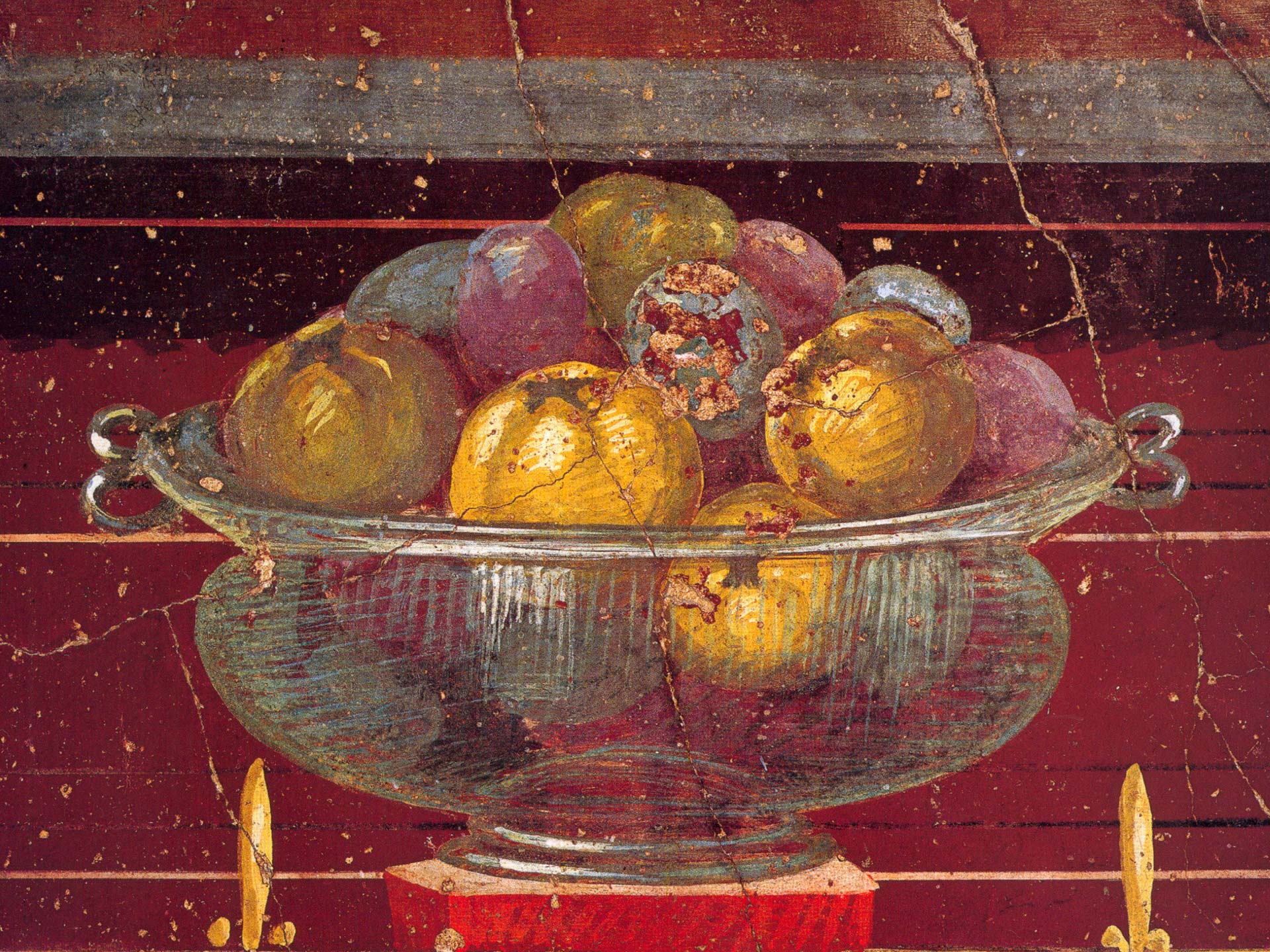 A glass vase filled with fruit (detail) of fresco in a room of Poppaea's Villa at Oplontis, Italy Level of Difficulty: Low |
 Garden (detail) from a fresco of the triclinium of the House of the Golden Bracelet, Pompeii, Italy Level of Difficulty: Moderate |
 Fountain and bird (detail) from a fresco of the triclinium of the House of the Golden Bracelet, Pompeii, Italy Level of Difficulty: Moderate |
 Female (detail) behind the figure of the Bacchante in Scene VII, Villa of the Mysteries, Porta Ercolano, Italy Level of Difficulty: Moderate to High |
 Angel (detail), Giotto di Bondone, c. 1305-06, fresco, Scrovegni (Arena) Chapel, Padova, Italy Level of Difficulty: Moderate |
 Queen Esther (detail), Andrea di Bartolo di Bargilla (known as Andrea del Castagno), c. 1450, fresco, Galleria Degli Uffizi, Firenze, Italy Level of Difficulty: High |