About Natural Pigments
The Best Way to draw. paint. create. last.
Based in Willits, California, in northern Mendocino County, Natural Pigments manufactures and distributes rare and hard-to-find materials for fine artists and decorators. We specialize in supplying artists’ materials used in historical painting from prehistoric times through the twentieth century — pigments, paints, mediums, grounds, and tools made to the standards of practice that built the Western painting tradition.
Who We Are
Natural Pigments is the second-largest supplier of historical and natural pigments in the United States. We manufacture all our paints, mediums, and prepared materials in Willits, California, and ship from there to customers in North America and Europe through fulfillment centers in California, Canada, and Germany. The company employs ten people and has operated continuously since 2003.
We travel the world to find materials specifically for professional artists and decorators — sourcing minerals from mines in Afghanistan, Italy, France, Russia, Ukraine, and Uzbekistan, processing these into natural pigments, and purchasing resins, gums, and plant materials from around the globe to make natural varnishes and painting mediums. Our mission is to provide the largest variety of natural pigments, paints, and other professional artists’ supplies in North America, and to promote the education and use of these materials through detailed technical information for their application in casein, encaustic, fresco, oil, watercolor, and tempera painting.
Natural Pigments publishes complete ingredient lists for all paints and formulated products — a level of disclosure that goes beyond industry standards and reflects our belief that serious painters deserve to know what is in the materials they use.

Fine Artist Supports: Rigid Metal Panels
Rigid metal panels for fine art painting, conceived, designed, and manufactured by Natural Pigments. Founded in 2014 to provide archival supports with the stability and surface preparation that historical painting techniques require.

Water-Soluble Wax Paint
Water-soluble wax paint combining the working properties of encaustic with the safety and convenience of waterborne painting. Released in 2014 after two years of development and registered as a U.S. trademark, Ceracolors opened new possibilities for painters who value the surface qualities of wax without the hazards of heat and solvent.

Natural and Historical Pigments
Natural and historical pigments sourced from minerals and traditional processes worldwide. The parent brand and the foundation of everything we make.

Gilding and Metalpoint Products
Metal leaf products, including gold, silver, and specialty alloys, along with metalpoint and silverpoint drawing materials. Launched in 2007, Aurum serves the needs of gilders and historical-technique practitioners working in traditional methods.

Fine Artists Pigments, Artist Oils, and Watercolors
Artist oil paints, watercolors, and pigments made without modern stabilizers or additives — ground from pigment and oil in the manner of historical practice. Launched in 2007 and registered as a U.S. trademark, Rublev Colours represents our commitment to materials that prioritize longevity over convenience,


George O'Hanlon
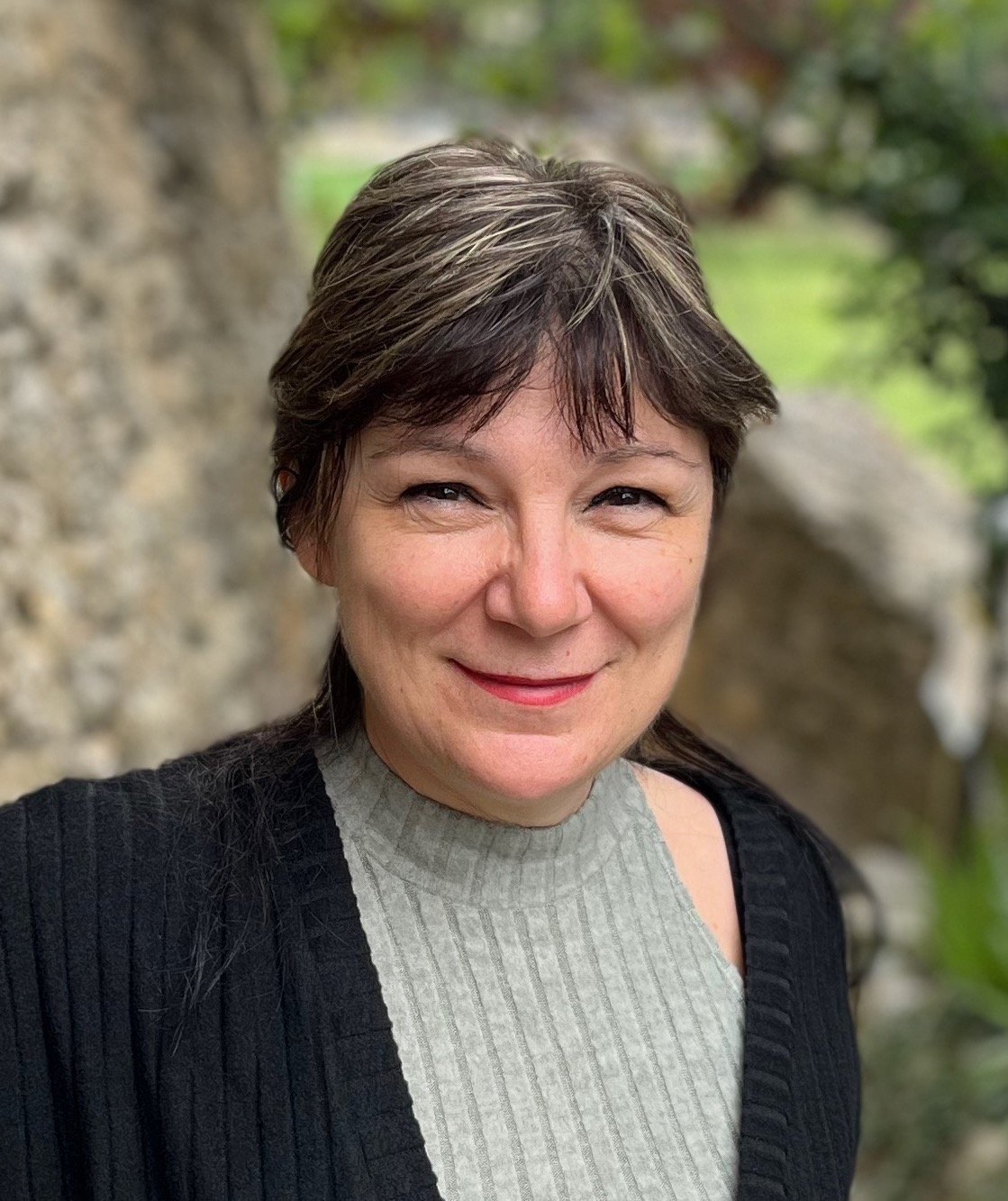
George O’Hanlon
Technical Director, Co-founder
George O’Hanlon is the technical director and co-founder of Natural Pigments and the executive director of Iconofile, a nonprofit educational organization dedicated to promoting the understanding of sacred art. George received a fine arts education and apprenticeship in Mexico, then served as art director and later creative director for Silicon Valley advertising agencies, working on major accounts including Sony, Hewlett-Packard, and Ricoh. He founded an agency that was later acquired by Shin-Etsu and served as vice president of U.S. marketing.
In 1992, George studied traditional art techniques and traveled to Russia to study with tempera and fresco masters. In 2001, he co-founded Iconofile and, in 2003, Natural Pigments. Since then, he has formulated hundreds of artists’ paints and materials, including the Rublev Colours line of oil paints and watercolors made without modern stabilizers, and Ceracolors water-soluble wax paint. George is a member of ASTM International’s D01.57 subcommittee on artists’ paints and materials, where he has worked since 2019 with Golden Artist Colors and Winsor & Newton to revise the lightfastness standard in ASTM D 4302. Since 2010, Natural Pigments has served as a custom colormaker for painters including John Currin, Cecily Brown, and Richard Phillips — the twenty-first-century equivalent of the nineteenth-century artists’ colourman.
George’s technical writing on oil paint formulation and historical materials has been published since 2007, including influential pieces on zinc white in oil paint, additives in modern oil paint, and the closure of Kremer Pigments’ New York store.


Tatiana Zaytseva
Tatiana Zaytseva
Administrative Director, Co-founder
Tatiana Zaytseva is the administrative director and co-founder of Natural Pigments and the secretary of Iconofile, a nonprofit educational organization dedicated to promoting understanding of sacred art. Tatiana received her education in apparel design and manufacturing in Saint Petersburg, Russia, and a second degree in engineering process controls. After moving to the United States in 2001, she helped establish Iconofile and, in 2003, later Natural Pigments. Her experience in apparel manufacturing enabled Natural Pigments to establish production processes for hundreds of small, specialized formulations — the operational foundation that allows the company to manufacture single-pigment paints and custom-ground colors at scales far smaller than conventional paint manufacturers can support.


2000–2002: Origins
In 2000, George O’Hanlon traveled to Russia to study icon painting and traditional art techniques, where he met Tatiana Zaytseva. The couple married in 2001 and made their first pigment-sourcing trip with Russian mineralogist Alexander Grigoriev, traveling throughout Siberia and central Russia to locate sources of historical and natural mineral pigments. They returned with thirteen mineral and earth pigments prepared specifically for artists working in egg tempera and fresco. In 2002, George and Tatiana established Iconofile, a nonprofit art education organization dedicated to teaching icon painting techniques, and began publishing the sacred art journal Iconofile. Over the next twelve years, Iconofile sponsored workshops across the United States, inviting icon painting artists and fresco masters from Russia and Greece to teach traditional methods.


2003: Natural Pigments Founded
On September 3, 2003, George and Tatiana founded Natural Pigments in Santa Rosa, California, to provide natural mineral and organic pigments to a growing community of tempera and oil painters. While grinding oil paint for students that year, George discovered an important property of natural mineral pigments — a rheological behavior that distinguished them from modern synthetic pigments and that had not been documented in contemporary paint-making literature. This discovery changed his understanding of what oil paint could be and set the direction for everything Natural Pigments would later manufacture.


2005: Manufacturing Begins
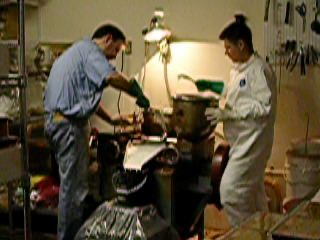
In 2005, George and Tatiana moved Natural Pigments to Willits, a small town in central Mendocino County. A three-roll mill purchased the previous year was installed in the garage of their new home on the mountain ridge above the town. They began making oil paints in the same manner as the old masters — without modern stabilizers, rheology modifiers, or driers — using only pigment and alkali-refined linseed oil, ground mechanically to the fineness that historical painters achieved by hand. The paints had handling properties George had not experienced with modern oil paints in his career as an artist. This became the foundation of the Rublev Colours line.


2006–2007: Institutional Credibility and Product Launch
In 2006, George became a member of ASTM International’s D01.57 subcommittee on artists’ paints and materials and was invited to lecture at the National Gallery of Art in Washington, D.C., on the technical aspects of historical painting materials. In 2007, he traveled to England at the invitation of Winsor & Newton and the Tate Gallery to discuss paint formulation and conservation. That same year, Natural Pigments launched Rublev Colours Artist Oils and Rublev Colours Watercolors, and introduced stack process flake white — a traditional lead white pigment made by the stack process method. Aurum Gilding Arts, the company’s metal leaf and metalpoint materials brand, also launched in 2007.


2008–2010: Innovation and Custom Colormaking
In 2008, an artist sent George a can of discontinued alkyd medium from a defunct Philadelphia company, asking whether Natural Pigments could replicate it. George said yes and developed Oleogel, a solvent-free gel medium that became one of Natural Pigments’ best-selling products and was later adopted by other manufacturers, including Gamblin, which released its own Solvent-Free Gel years afterward. In 2010, Natural Pigments began working with painter John Currin, making custom paints for his studio practice. This collaboration, which continues today and includes work with other notable painters such as Cecily Brown and Richard Phillips, reflects George’s goal of serving as a twenty-first-century artist’s colorman — a role that was common in the nineteenth century but had largely disappeared from contemporary practice.


2013–2014: Education, New Paints, and Artefex
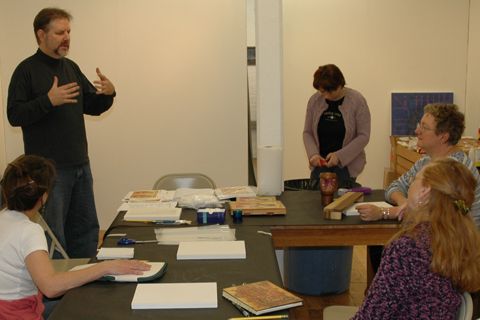
In 2013, Natural Pigments launched Painting Best Practices, a series of in-person seminars on oil painting techniques and materials science. That same year, Michael Harding visited the Natural Pigments factory in Willits. In 2014, after two years of development, Natural Pigments released Ceracolors, a water-soluble wax paint that combined the surface qualities of encaustic with the convenience of waterborne paints. Ceracolors and Rublev Colours were both registered as U.S. trademarks. Natural Pigments also founded Artefex in 2014 to manufacture rigid metal panels for fine art painting, addressing the need for archival supports with proper surface preparation for historical techniques. Iconofile’s work as a nonprofit educational organization concluded in 2014 after twelve years of workshops and publications.


2016–2019: Community Growth and Standards Work
In 2016, Painting Best Practices expanded to include an online community through a dedicated Facebook group, which allows painters worldwide to participate in discussions about materials and techniques. Natural Pigments also introduced aqueous pigment dispersions that year, providing water-based alternatives for artists working in acrylic, watercolor, and other aqueous media. In 2019, Natural Pigments partnered with Golden Artist Colors and Winsor & Newton to revise the lightfastness standard in ASTM D 4302 — a multi-year project addressing gaps in how the industry tests and reports pigment permanence. The collaboration was notable in part because other companies who were members of the ASTM subcommittee declined to participate. The first phase of the project was completed in 2026.


2024: HART Project and Education at Scale
In 2024, George traveled to southern France to meet Dr. Jaap Boon and conservator Leslie Carlyle at their homes. During that visit, George recorded a video with Dr. Boon, one year before his death. George began work on the Historical Artists’ Resources and Techniques (HART) project, a collaborative research initiative with conservators and materials scientists. That same year, Natural Pigments transitioned the Painting Best Practices educational program to a dedicated membership site, which has since grown to more than thirty thousand members worldwide.


2025–2026: Recent Work
In 2025, Natural Pigments released PrimaTone, an oil-alkyd paint line combining the handling properties of traditional oil paint with the faster drying times of alkyd resin. In 2026, the company completed the first phase of its ASTM D 4302 lightfastness revision work and continued to expand its line of historical pigments, including reconstructions of British watercolor formulations and the ongoing development of wax-resin painting systems.


Where We Are Now
Natural Pigments operates from a manufacturing facility in Willits, California, where a team of ten employees produces all Rublev Colours paints, Ceracolors wax paints, oil painting mediums, grounds, varnishes, and prepared materials. The company ships to customers in the United States, Canada, and Europe through regional fulfillment centers and maintains direct relationships with mines, refiners, and traditional materials suppliers in more than a dozen countries.
Current product lines include more than 200 natural and historical pigments, 111 oil paint colors, 84 watercolor colors, 48 Ceracolors formulations, 45 oil painting mediums, 12 grounds and primers, 8 varnishes, and complete lines of gilding materials, brushes, supports, and drawing tools. Recent additions to the catalog include Conservar varnishes (introduced in 2015), aqueous pigment dispersions (2016), and PrimaTone oil-alkyd paints (2025).
The Painting Best Practices educational program has taught more than 1,000 artists through in-person seminars since 2013, and thousands more through its website and online courses. The Painting Best Practices Facebook group, founded in 2016, has grown to more than thirty thousand members worldwide. Natural Pigments publishes full ingredient lists for all paints and formulated products on each product page — a level of transparency not required by industry standards but consistent with the company’s commitment to informed materials choices.
Natural Pigments continues active collaborations with conservators, including ongoing work with the HART project, partnerships with museum conservation departments, and direct engagement with painters whose studio practices require custom formulations and historical techniques. The company remains committed to the principle that guided its founding: that the materials used in historical painting — made without modern compromises — are still the best materials for painters whose work is meant to last.
Natural Pigments is based in Willits, California. For more information, visit naturalpigments.com or contact us at Contact.