


Rublev Colours Watercolors—Like the Golden Age of Watercolors
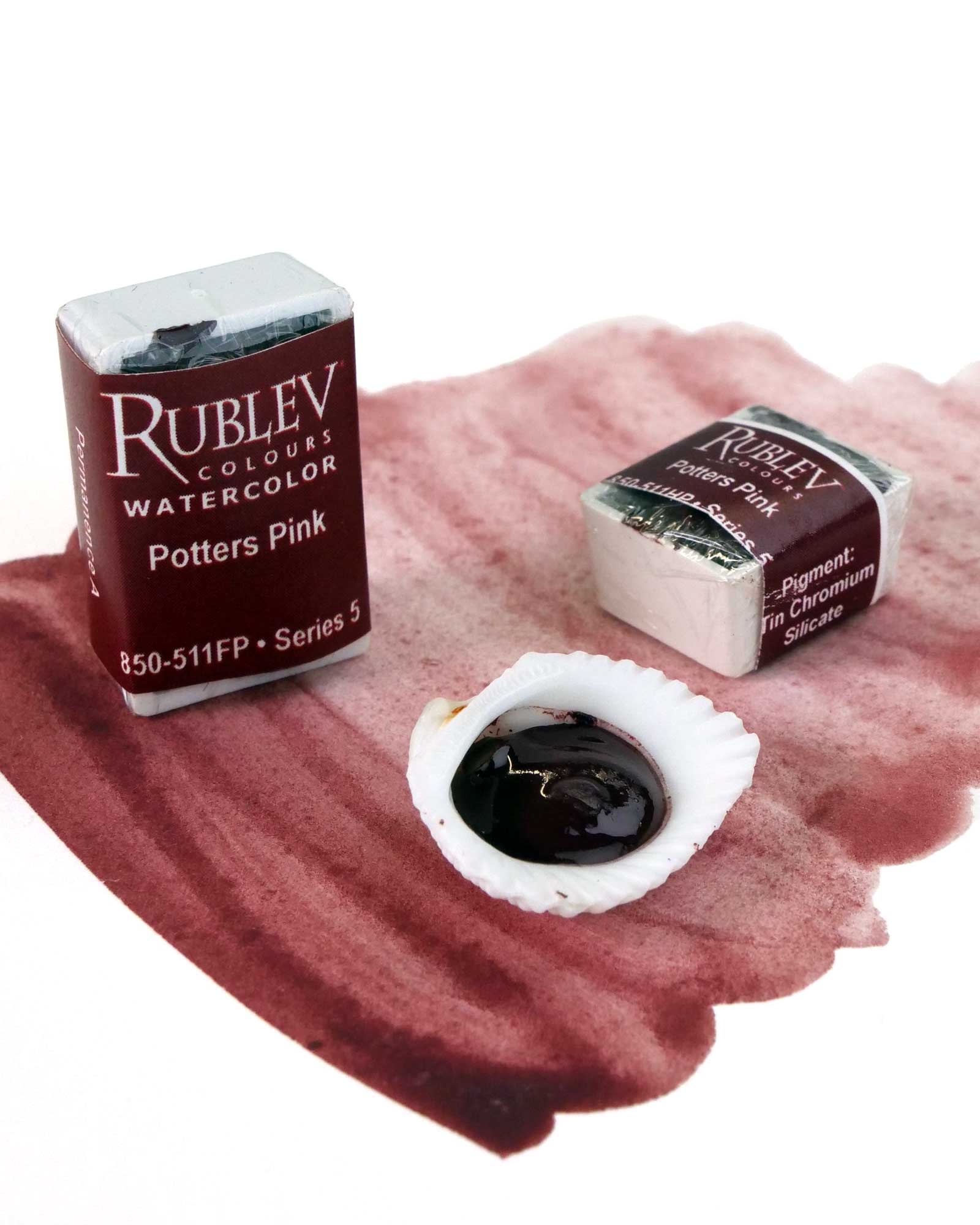
Natural Pigments gives today’s artists new choices by making watercolor paint simple again. Rublev Colours Watercolors provides a new selection of colors by restoring natural and historical pigments to the artists’ palette. Rublev Colours Watercolors are made with the same pigments used by watercolor masters of the seventeenth to nineteenth centuries. The colors are genuine single-pigment paints available individually in tubes and cakes.
Natural Pigments makes Rublev Colours Watercolors in small batches using gum arabic and sugar syrup, which were the essential ingredients in watercolors of past centuries. There are no other additives to alter the characteristics of each color. Without modern additives, these paints have a noticeably different consistency and appearance. They are substantially thicker than modern watercolors because we do not use any thickeners, dextrin, or other additives found in contemporary watercolors. You will feel the difference, like the body colors used by early 19th-century British watercolorists—the Golden Age of watercolors.
Rublev Colours Watercolors are made by Natural Pigments. Please read our description of Rublev Colours Watercolors for more information. For information about the permanence and composition of Rublev Colours Watercolors, visit Watercolors Composition and Permanence.
Visit our Watercolor Swatch and Pigment Guide for details on Rublev Colours Watercolors hand-painted color swatches and where to find pigment information.
Painting with Rublev Colours Watercolors
Interview with master watercolorist Michele Bajona on portrait painting in watercolors. Natural Pigments founders Tatiana and George interview Michele regarding his techniques, inspiration, and the materials he uses to create his expressive portraits. J Michele as he reveals his passions and his art.
Join us on the Artist Materials Advisor when we introduce 12 new watercolors that cover a range of hues from blue, green, yellow, and red to purple. Watch demonstrations of each color.
Why Rublev Colours Watercolors?
Rublev Colours Watercolors are a popular choice among modern-day watercolorists due to their advantages over contemporary commercial watercolors. Made using natural ingredients and traditional techniques, these watercolors provide artists with a high-quality alternative that produces rich and luminous colors that are both long-lasting and easy to use.
One of the most significant advantages of Rublev Colours Watercolors is their superior lightfastness. Commercial watercolors use synthetic pigments that may fade over time or when exposed to direct sunlight. However, the natural pigments used in Rublev Colours Watercolors are lightfast. They resist fading and maintain their vibrancy for decades, making them an ideal choice for artists looking to create pieces that will stand the test of time.
Another advantage of Rublev Colours Watercolors is their unique texture and feel. Unlike many commercial watercolors, which can have a synthetic or plastic-like quality, Rublev Colours Watercolors are made using natural ingredients that give them a unique texture and feel, making them a pleasure to work with and enhancing the overall quality of the final artwork.
Rublev Colours Watercolors also offer a broad range of colors that are easy to mix and blend, allowing artists to create a virtually unlimited range of shades and hues. Whether you are a professional artist or a hobbyist, these watercolors are an excellent choice for creating stunning, long-lasting pieces that showcase your creativity and talent. Overall, Rublev Colours Watercolors are an excellent investment for anyone looking to produce high-quality watercolor artwork that will stand the test of time.
Frequently Asked Questions
What is watercolor paint made out of?
Watercolor consists of finely ground pigment suspended in a binder, traditionally made of gum arabic, water, and other additives to preserve and stabilize the paint. Sugar syrup, invert syrup, glucose, and glycerin are often used as humectants to slow drying time caused by the rapid evaporation of water. Commercial watercolor paint may also contain different binders, such as dextrin, starch, and gum tragacanth.
What is watercolor paint used for?
Watercolor paint is often used to paint outdoors, such as plein air, but is suitable for still life, landscape, or portrait paintings. Often painters create small-scale studies of complex paintings that they plan to do on a much larger scale. Watercolor works well with colored pencils, watercolor pencils, graphite, and ink.
Is watercolor paint permanent or long-lasting?
Watercolor paintings can last for centuries if made from pigments with good lightfastness and compatibility with the substrate and watercolor medium. Furthermore, if the artwork is painted on paper that is properly buffered against the formation of acids and is not exposed to ultraviolet light, it will endure.
What are the best surfaces to apply watercolor paint?
Watercolor paint requires an absorbent substrate for long-lasting artwork. Traditionally, paper is the support most often used for watercolor painting. Other supports can be suitable for watercolor painting if coated with an absorbent ground or primer formulated for watercolor paint.
What is the difference between watercolor paint and other paint media?
While watercolor paint does not allow thick applications, you can build up layers of colors while painting to some degree. Watercolor is transparent, and unlike other paint mediums, you can not cover up your mistakes. However, you can lift color from the substrate because the watercolor binder remains water soluble. The amount of color you can remove depends on the pigment's staining power and the substrate's absorbency. If you want to preserve areas of light color, then it is best to plan your painting.
